Finance has become a real-time function
Sep 2026
Building an AI-native finance function. I'm just trying out stuff!


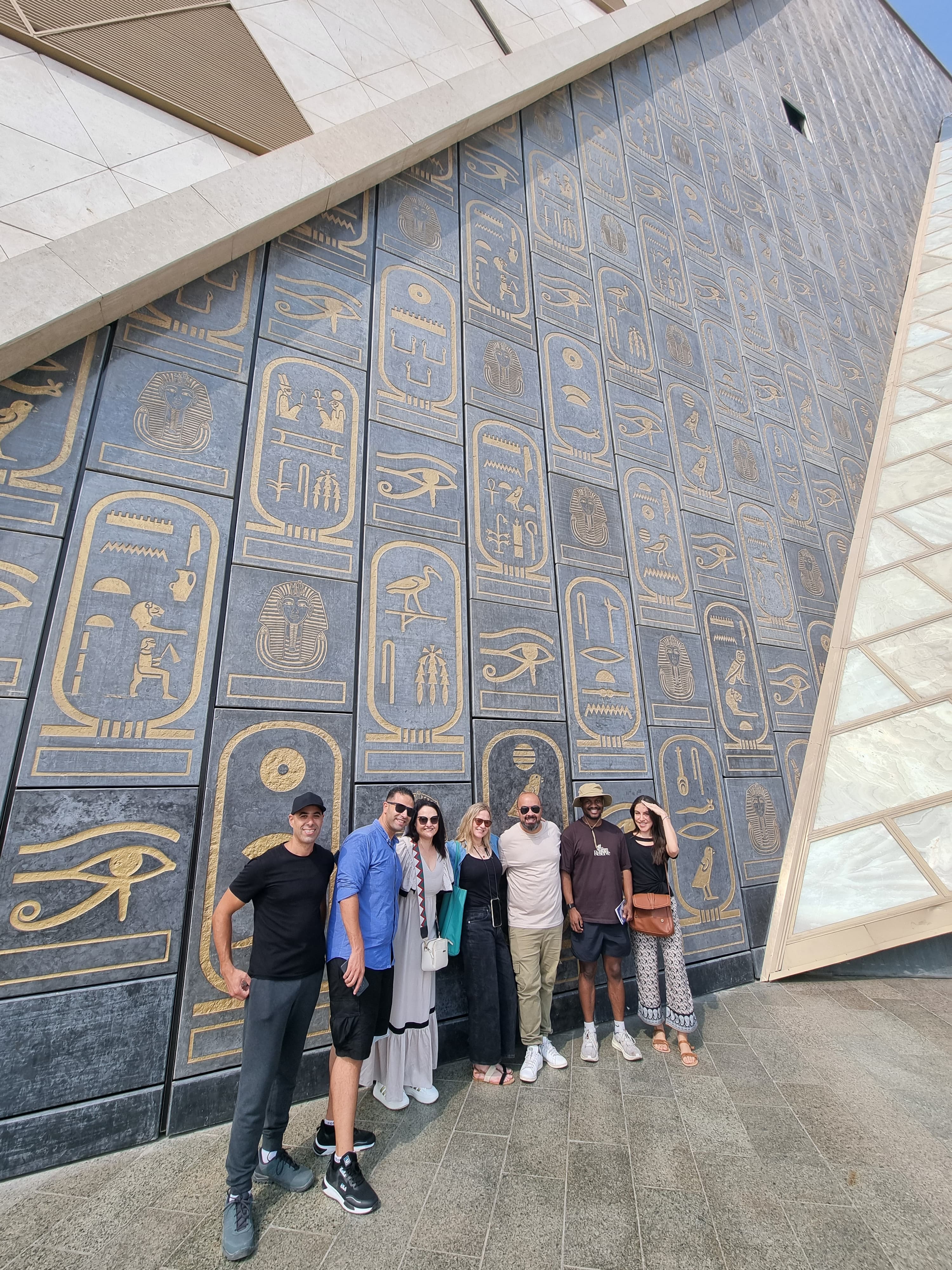
A lot has changed since I last wrote anything. I've left my role as Finance Lead looking after the Egypt region, and I'm now doing something I've wanted to do for a long time: building at sandstone collective.

It's a strange position to write from. Most of my career has been spent inside finance functions, building processes, models, closing books, explaining variances, turning numbers into stories, defending a number in front of people who'd already made up their minds about what it should say. Now I'm on the other side, building the tools I spent few years wishing someone else had already built for me — especially when GPT-3 was released back in November 2022. I'm open to partnering with service businesses.
You've probably seen the headlines by now. Depending on who you ask, OpenAI has either reached AGI or is close enough that the distinction barely matters anymore, and it took less than 4 years to achieve this milestone — this is just remarkable, we are truly in the singularity era. The work from both open-source and closed models have been incredible to witness, and it's also changing the way we operate. I don't think that claim regarding AGI needs to be resolved for the point I want to make, because inside a finance function, "how capable is the model" was never actually the hard question. The hard question was always "can I trust what it just told me enough to put my name next to it."
That's the part nobody talks about enough. Capability and trust are not the same axis. A model can reconcile three ERPs against a general ledger, flag every variance, and write you a forecast in the time it takes to make coffee, and none of that matters if a controller can't trace the number back to its source and defend it in front of an auditor, a board, or a CFO who's asking pointed questions on a Tuesday morning. Accuracy and diligence aren't nice to haves in finance. They're the whole job. They're the north star. Every other function in a business can move fast and fix it later. Finance can't, because the number you publish is the number people make decisions on.
So while the rest of the world argues about whether we've hit AGI, finance teams are quietly doing something more interesting: figuring out how to actually trust the thing. Not "is it smart enough" but "how do I know it's right, and how do I know it stays right." That trust layer is still being built, function by function, workflow by workflow, and the teams doing it properly are obsessing over one thing above all else: sources. Where did this number come from. What system. What line item. What date. If you can't answer that, the output is unreliable, not decision support.
This is the part of building monoclose (currently in close beta) that's taught me the most. AI changes the unit of work. Finance leaders can redesign the full path from source data to decision.
Consider the close. Every CFO / Finance team knows the monthly process: actuals in one system, invoices/purchase orders in another, accruals in a spreadsheet, and the explanation for a variance buried in a message thread or once-a-quarter board deck. AI presents us the opportunity to work towards a different operating model. The ambition behind a zero-day close is to connect approved spending plans, general-ledger actuals, invoices/purchase orders, accruals, and transaction details in a continuously reconciled view — which is the objective of monoclose — where each variance can be traced to the underlying activity. AI can prepare an initial explanation and flag the exceptions that require attention. Finance validates the numbers, applies judgment, and owns the final sign-off.
I went into this assuming the hard engineering problem would be getting a model to do the reconciliation well. It wasn't. Models are already good enough at that. The hard problem is building the layer underneath it (the harness) — the one that shows its working, the one that lets a human trace every output back to a source document without having to redo the work by hand just to check the machine didn't quietly get it wrong (that's the manual work finance teams do daily). That layer is the actual product. The reconciliation is table stakes when systems are fragmented.

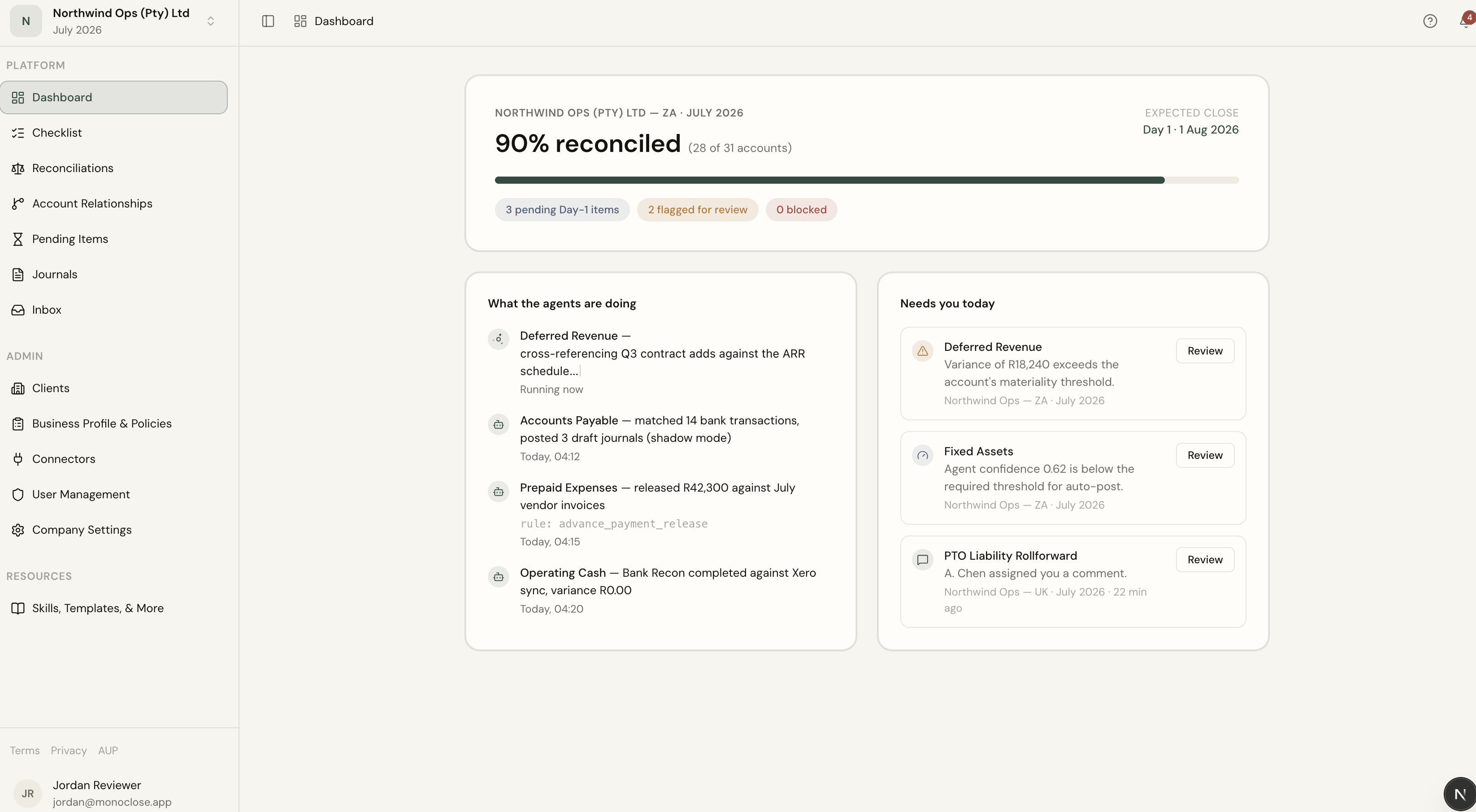
The close does not disappear. What begins to disappear is the scramble to reconstruct the business after the period ends. That reconciled foundation can power continuously updated budgets, forecasts and insights.
Here's the thing I've become fairly convinced of, and it's a bit counterintuitive if you're picturing AI-native finance as fully automated finance. It isn't, and it shouldn't be, at least not yet. An AI-forward finance team still needs at least one person on it who can do every single workflow manually, end to end, without the tooling. Not because the tooling fails often, though it will occasionally, but because that person is the one who knows what "right" actually looks like. They're your failover when something breaks. More importantly, they're the reason the system keeps improving, because they're the ones who can look at the generated output and say "that's technically correct but it's missing the context that this vendor pays late every March" and feed that back into the process. Without that person, you don't have an AI-native finance team. You have a finance team that's outsourced its judgement to something it can't fully verify, and that's a very different and much riskier thing.
I've lived this on both sides. Using Claude/ChatGPT to help lead a finance team taught me how much faster the mechanical parts of the job can move once you start to look at every workflow from first principle. But it also taught me exactly where the line sits — the point where a model's output needs a human who actually understands the business to look at it and either sign off or push back. That line doesn't disappear as models get more capable. It just moves, and the teams that figure out where it currently sits are the ones who get real leverage out of this instead of just faster spreadsheets — which is why you are seeing the inverse in job demands as AI progress matures (this totally contradicts the notion that AI will take most our white collar jobs).
That's the bet behind monoclose. AI-native teams that get the harness right, source by source, check by check, stop being a cost centre reporting on what already happened and start telling the business what's coming next. That shift is the real prize, and it's why this matters. I've sat in the seat where close ate the first two weeks of every month and decisions lagged behind it. I know exactly what getting that time back is worth, without losing the rigour that made the number trustworthy in the first place.
If you are keen to learn more about monoclose and what we are building, even interested in building this with me, or you know someone who might be keen — please do reach out at lindo@sandstone-collective.com.
Originally published on Substack. If you found this useful, subscribe for more.